Several European nations were expanding overseas in a development
called the New Imperialism. The reason
for this expansion included how factories depended on raw materials, but no
single country could supply all of the resources. The Imperialism and Anglo-Saxonism beliefs
had started to gain popularity, and so the United States increased its
involvement in foreign affairs to have more influence over the other
countries. There were three
international crises that illustrated this new approach. The first, in 1888, the country risked a war
in order to prevent Germany from taking control of Samoa in the south
Pacific. Three years later, an
infuriated mob in Chile attacked American sailors. Lastly, in 1895, the U.S. backed up Venezuela
against Great Britain in a border dispute with British Guiana.
Sunday, April 14, 2013
Saturday, April 13, 2013
The Spanish-American War - Isaac
The Spanish-American war was fought from April 25, 1898 – August 12, 1898 (3
months, 2 weeks and 4 days). It was fought over the freedom of
Cuba because America wanted Spain to release its control over the small nation.
Before the war, America supported Cuba in its rebellion against Spain because
their economies had become intertwined.
Cuba eventually succeeded and became the Republic of Cuba in 1895, but
Spain refused to let this be the end. They
sent in 200,000 troops to take back power, and President McKinley decided that
he did not want to be involved in this war.
In January 1898, McKinley grew worried about the
Americans stationed in Cuba, so he ordered the USS Maine to go pick them up in
case of an emergency. In February, the
USS Maine exploded in the Havana Harbor, and the Americans blamed the Spanish
for it. “Remember the Maine!” was the
new slogan that was shouted among the Americans who wanted to go to war with
Spain. This put McKinley under a lot of
pressure, and he eventually had no choice but to agree to go to war or else he
would lose his job. The troops on both
sides of the war were not prepared for the intense battles and the new tropical
diseases. The Americans eventually
prevailed and protected Cuba, and they helped out Puerto Rico too.
Friday, April 12, 2013
An American Empire - Jenn
At the conclusion of the Spanish-American War, America had
acquired the islands of Guam and Puerto Rico.
The Philippines remained a gray area because America could not decide
what to do with them. If they annexed
them, then that would mean that America would lose its republican ideals and
gain imperial control over a country forcefully without agreement with its
people. People who supported the
annexation thought that having control over the Philippines would give economic
and militaristic benefits. Some of them
also believed that it was imperative to help the “less civilized” country. On the opposite side of the totem pole were
the anti-imperialists, which included a few notable people including Andrew
Carnegie and Mark Twain. Carnegie
spawned an excellent argument that seizing control of the Philippines would
cost more money than what would be profited from the economic benefits of
selling and distributing goods there.
In the end, President McKinley agreed to annex the Philippines by paying
Spain $20 million and became an imperial power.
Another
problem faced by the United States was Cuba.
With the signing of the Treaty of Paris, the United States reluctantly
granted Cuba their independence, but in a way they had to keep Cuba linked to
them for political purposes. President
McKinley allowed them to write their own constitution with the exception of an
added amendment. This amendment, called
the Platt Amendment, required Cuba to keep its ties with other nations limited
to the United States, gave the United
States the right to buy and lease naval stations there, kept Cuba’s debt low,
and allowed the U.S. to intervene when Cuba’s independence was threatened. Soon after, Congress passed the Foraker Act
to establish a civil government for Puerto Rico. Things were peaceful, for a short time.
The
Philippines were not content with the new annexation, so they rebelled in the
Philippine-American War. This war lasted
for around three years, and there were 4,300 American casualties and
50,000-200,000 Filipino casualties. The
United States turned to hypocrisy and used the same military tactics that they
had convicted Spain for when they used them on Cuba. They established reconcentration camps and
separated the guerrillas (Filipino soldiers) from the innocent civilians. Many people died from disease and
starvation. William Howard Taft, the
future president and the first governor of the islands, tried to win back the
respect of the people by implementing education, transportation, and health
care into their society. A month after
America captured the leader of the guerrillas, they surrendered, and the war
ended. It wasn’t until 1946 that the
Philippines were granted independence from the U.S.
Thursday, April 11, 2013
New American Diplomacy - Maija
In 1894 China and Japan broke into a war
over Korea. The war showed Japan mastered the western technology and industry.
Germany, France, Britain, and Russia wanted “leaseholds” with China. President
McKinley and John Hay were opposed to this but both of them still supported the
“Open Door Policy” meaning all countries could trade with China. In 1899 John
Hay sent notes to the 4 countries asking them not to discriminate against
nations that were interested in doing business with them. The Society of
Harmonious Fists (The Boxers) destroyed “Foreign Devils” and “Chinese Christian
Coverts” in 1900. The boxers killed more than 200 foreigners and took others as
their prisoners.
After the German ambassador of China
was killed eight nations: Germany, Austria-Hungary, Britain, France, Italy,
Japan, Russia, and the U.S. began to intervene. Together they all formed an
international force of nearly 50,000 troops. Of those troops 3,400 of them were
American. The force landed in China to rescue foreigners that had been captured
and to destroy the Boxers. The U.S. retained access to China’s trade of tea,
spices, and silk. In 1901 President McKinley was attacked by a man named Leon
Czolgosz and died a few days after the attack. Theodore Roosevelt then took
over the presidency. He was 42 years old and the youngest President to ever
take office. The people didn’t like the idea of Roosevelt being anything more than the Vice President. They feared he was too young to know what
was best for the people.
Wednesday, April 10, 2013
The Roots of Progressivism - Isaac
The roots
of progressivism arise from a mixture of things. Intelligent women wanted the government to
step in and make a bunch of regulations for children, work places, and food
processing. Middle class workers were a
big part of it too because they had the most time on their hands, a decent sum
of money, and a well-rounded education. The catalyst for all this was a terrible fire
in which 100+ people died in and a book called The Jungle by Upton Sinclair, which talked about how horrible
the meat-packing industry was.
Muckrakers
were the people who spoke out about these ideas in the first place. They were influential journalists who
uncovered political corruption and problems with the workforce. People began to form ideas about how to stop
the political machines and reform the government. There were so many problems that the
progressives wanted to stop, and they thought that they would all get better if
they pushed for prohibition, the banishment of alcohol in their society. Women and African Americans took advantage of
this period of reform and started protesting for the rights and suffrage that
they deserved.
Tuesday, April 9, 2013
Roosevelt and Taft - Jenn
Theodore
Roosevelt was the youngest president to win an election, and he believed in the
rising philosophy of Social Darwinism.
Roosevelt formed a reform program called the Square Deal, in which he
tried to keep the “common” people safe from the supremacy of big business. He was a strong believer of regulating big
businesses; he didn’t believe it would be for the benefit of the nation as a
whole to eradicate them. The Sherman
Antitrust Act was put into effect on behalf of this argument to regulate trusts
and prevent these businesses from turning into monopolies. Another problem that presented itself during
his presidency was the Coal Strike of 1902.
A group of labors called the United Mine Workers went on strike in the
eastern mines of Pennsylvania, demanding increased pay with better working
conditions, less hours, and the right to establish an effective union. He reasoned with them, and they finally
agreed upon arbitration, which was the interference by an outside party to
negotiate a settlement. In this case,
the outside party was the federal government, and this became one of the first
steps in letting the national government act as an advisor in uncontainable
situations like this.
In this
time period, consumer protection was of the utmost importance. Upton Sinclair’s The Jungle had many people outraged and sick of what was happening
in the meatpacking industry. In order to
ease and retain the citizens’ piece of mind, Roosevelt helped pass the Meat
Inspection Act, which required that the government inspects the meat being
sold, and that the Agriculture Department is in charge of setting what rules
and criteria that the companies must abide by.
On the same day, the Pure Food and Drug Act was also passed to ensure
that all labels on drug containers and food packages are authentic. Another situation that Roosevelt became
passionate about was the conservation of nature. He implemented around 100 million acres of
forests to the national reservations and set up five new national parks. Roosevelt really did what he could to please
the “common” folk.
William
Howard Taft was the next president in office after Roosevelt. Taft had made some dumb decisions during his
presidency, but nothing was more obstructive than the Payne-Aldrich Tariff. This tariff was a compromise between two contradictory
acts that cut and raised taxes.
Naturally, this tariff didn’t solve anything, and caused more problems
than it did solutions. Roosevelt had
warned that something like this might cause the Republican Party to split, and
later on they did. It is said that Taft
had abandoned the application of progressivism by doing many things Roosevelt
disagreed with. One of the most
important things that he wanted was to completely break apart trusts, and he
had launched an antitrust lawsuit against U.S Steel. This completely went against Roosevelt’s
ideals, and so he eventually lost his support.
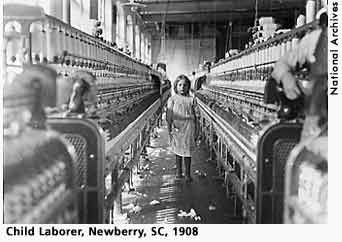
Taft did complete a few good actions during his presidency though. He established the Children’s Bureau to
investigate the injustices of child labor and present evidence of this
publically to raise awareness.
Monday, April 8, 2013
The Wilson Years - Maija
The election of 1912 was a competition between two candidates;
Theodore Roosevelt and Woodrow Wilson. Taft failed to live up to progressive
ideals. Woodrow Wilson was the former governor of New Jersey and lived by what
he called “New Freedom”. Woodrow Wilson won the election with 435 votes. Wilson
signed laws introducing the direct primary, establishing utility regulatory
boards, and gave the people a voice. He believed in destroying monopolies and
signed laws to levy income tax. He signed the Federal Reserve Act, Federal Trade
Commission, Unfair Trade Practices, Clayton Antitrust Act, and the first law
against child labor. The law made it impossible to have children under the age
of 14 working in factories.
Subscribe to:
Posts (Atom)
.jpg)